
The Platypus and Oxygen: Nature’s Lesson in Survival
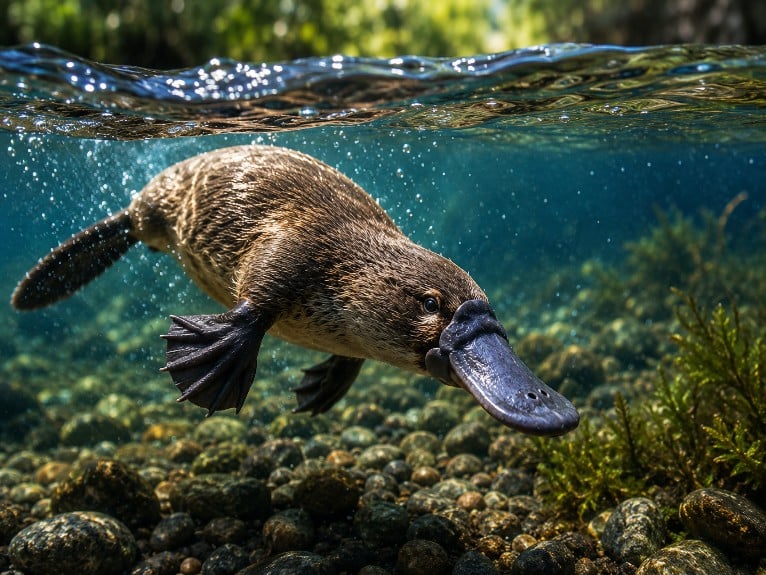
The platypus is one of the most unusual mammals on Earth. With its duck-like bill, webbed feet, and semi-aquatic lifestyle, it has fascinated scientists for generations. Yet beyond its strange appearance lies something even more extraordinary – its incredible ability to manage oxygen.
As explained in Oxygen: The Circle of Life by Teri Mathis, the platypus possesses unique physiological adaptations that allow it to thrive underwater while relying entirely on oxygen from the air. Unlike fish, the platypus cannot extract oxygen from water. Instead, it depends on highly specialized cardiovascular and respiratory systems to survive extended dives and repeated underwater activity.
A Mammal Designed for Oxygen Conservation
When a platypus dives underwater to forage for food, its body immediately enters what scientists call a “dive response.” During this process, blood flow is restricted to non-essential tissues so oxygen can be reserved for the organs that need it most, the brain and heart.
This remarkable oxygen efficiency allows the platypus to remain underwater for up to four minutes without switching to anaerobic metabolism, a low-oxygen state that often leads to fatigue and slower recovery. In extreme situations, platypuses can even stay submerged for up to ten minutes.
One of the keys to this ability lies in the animal’s blood chemistry. Platypuses have high hemoglobin concentrations and a strong oxygen-carrying capacity, enabling their blood to transport oxygen more effectively throughout the body.
The Importance of Oxygen-Rich Environments
Another fascinating fact about platypuses is their dependence on clean, oxygen-rich water. They are extremely sensitive to environmental changes, and low oxygen levels in rivers can become fatal.
This sensitivity highlights an important biological principle: oxygen is essential for cellular survival. Every living cell depends on oxygen to produce energy efficiently. When oxygen availability drops, cells must work harder and less efficiently, often creating stress within the body.
The platypus demonstrates just how critical oxygen efficiency can be, not only for athletic endurance but for overall survival.
Heart Rate and Rapid Recovery
During dives, the platypus slows its heart rate dramatically, dropping from as high as 230 beats per minute to as low as 10 beats per minute. This conserves oxygen while underwater.
Once the platypus resurfaces, recovery happens quickly. Within just 10–15 seconds, its heart rate increases rapidly, restoring oxygen levels before the next dive. This quick re-oxygenation process allows the animal to continue functioning efficiently without prolonged exhaustion.
What Humans Can Learn From the Platypus
The platypus serves as a fascinating example of how oxygen supports endurance, recovery, and cellular function. While humans do not possess the same underwater adaptations, the body still relies on oxygen for every essential process, from energy production and circulation to mental clarity and physical performance.
Understanding oxygen efficiency helps us better appreciate the delicate balance between oxygen, metabolism, and wellness. Nature continues to remind us that oxygen is far more than something we breathe, it is one of the foundations of life itself.


